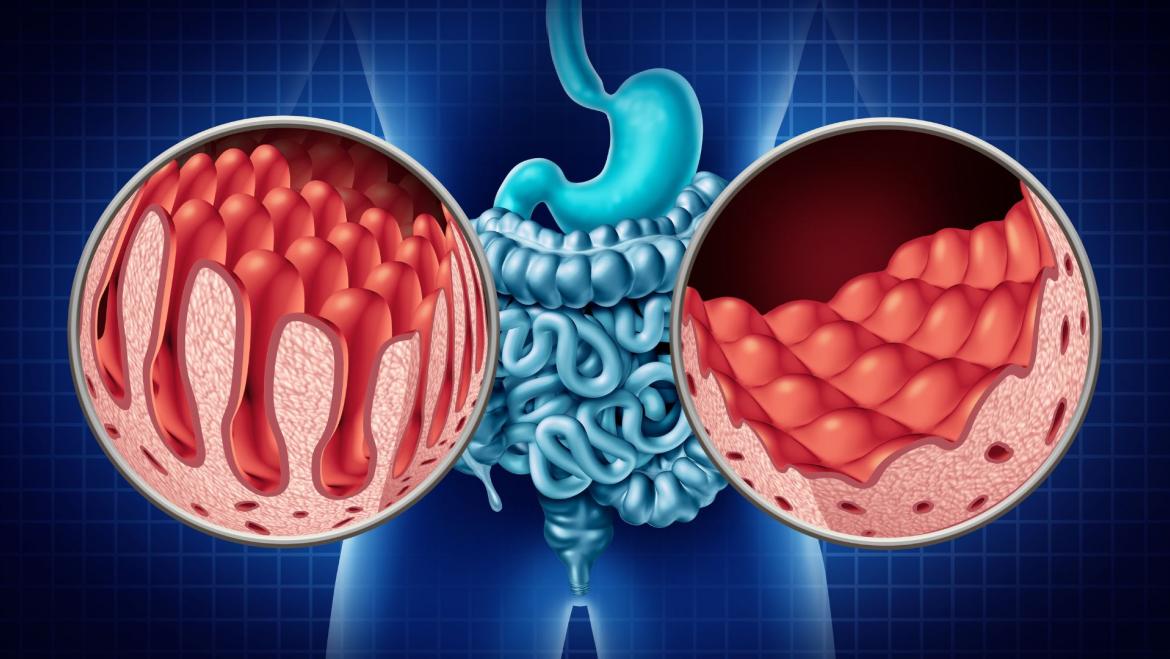
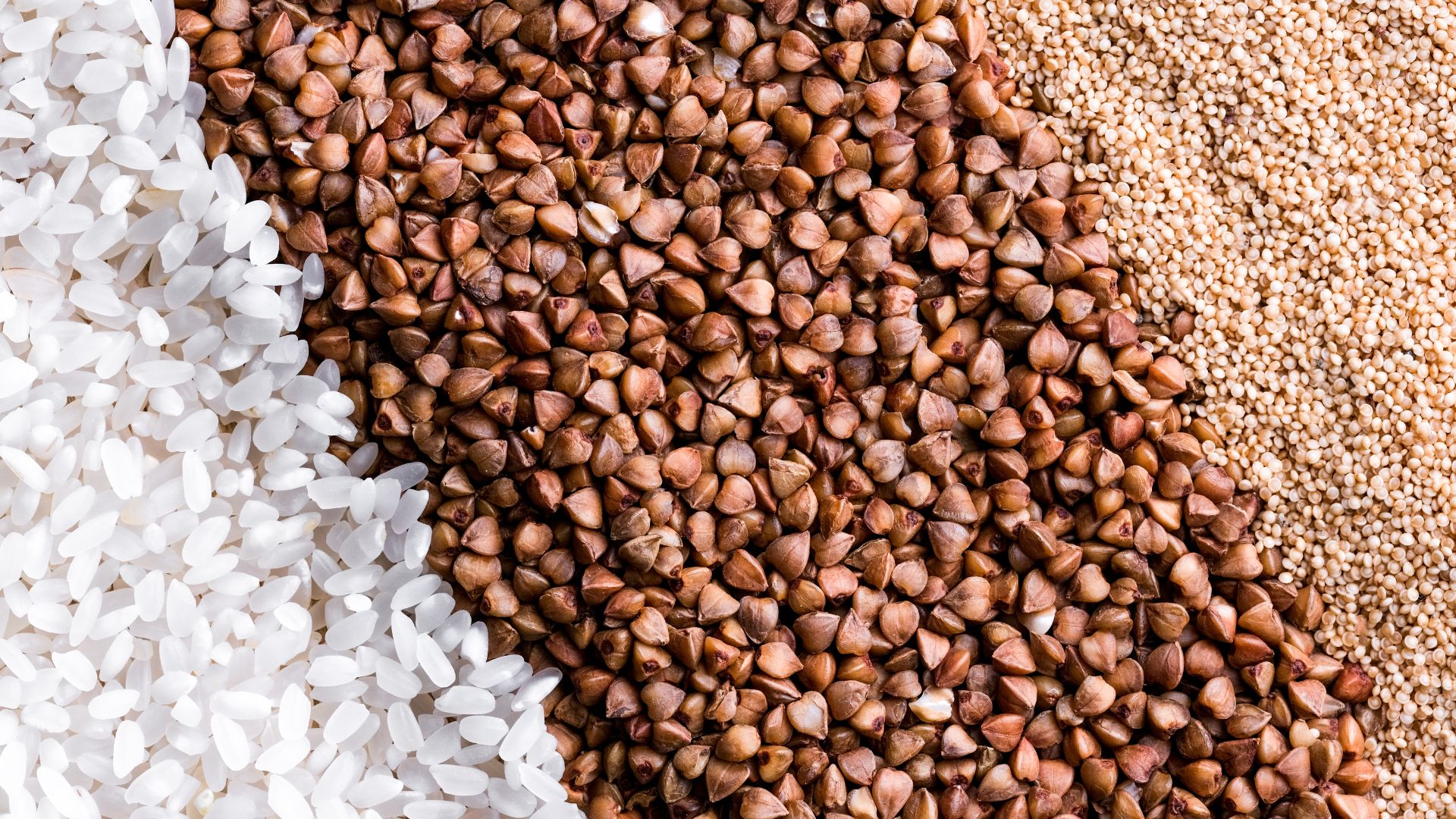
Non-celiac gluten or wheat sensitivity is a situation in which a person experiences symptoms after consuming foods with gluten or wheat, but does not have celiac disease or a wheat allergy.
Symptoms can be digestive, such as abdominal pain, bloating, gas, diarrhea or changes in bowel rhythm, but other discomforts can also appear such as fatigue, headache or a feeling of “brain fog”. These symptoms can closely resemble those of celiac disease, wheat allergy or irritable bowel syndrome, so the diagnosis cannot be made based on symptoms alone.
Before removing gluten from the diet, it is very important to consult with a healthcare professional. You should not start a gluten-free diet on your own before testing, as this can alter the results and make it difficult or impossible to correctly diagnose celiac disease.
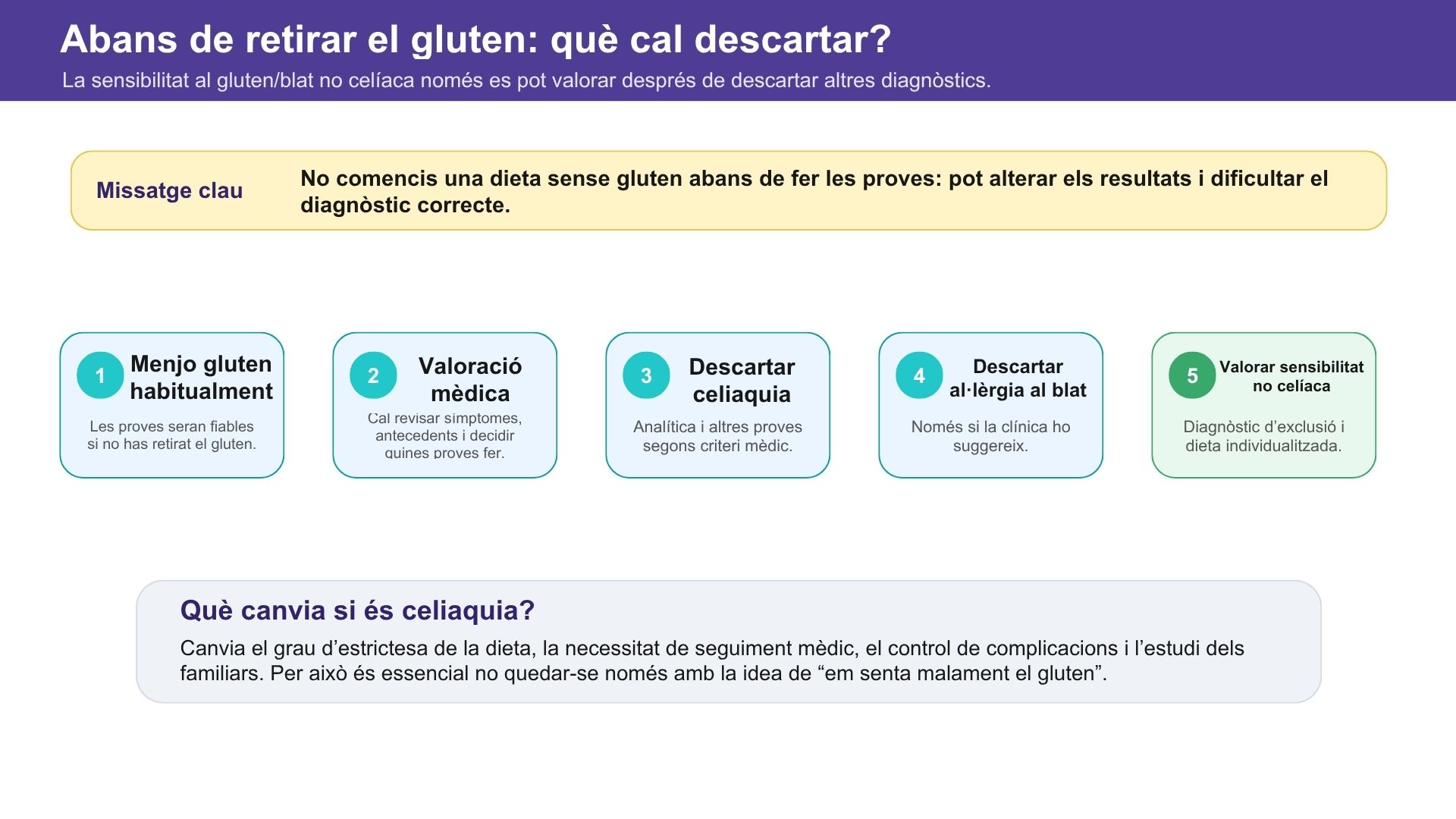
The first step is always to rule out celiac disease or a wheat allergy. This is essential, because the diagnosis completely changes the treatment, the degree of strictness of the diet, the need for medical monitoring and the study of relatives.
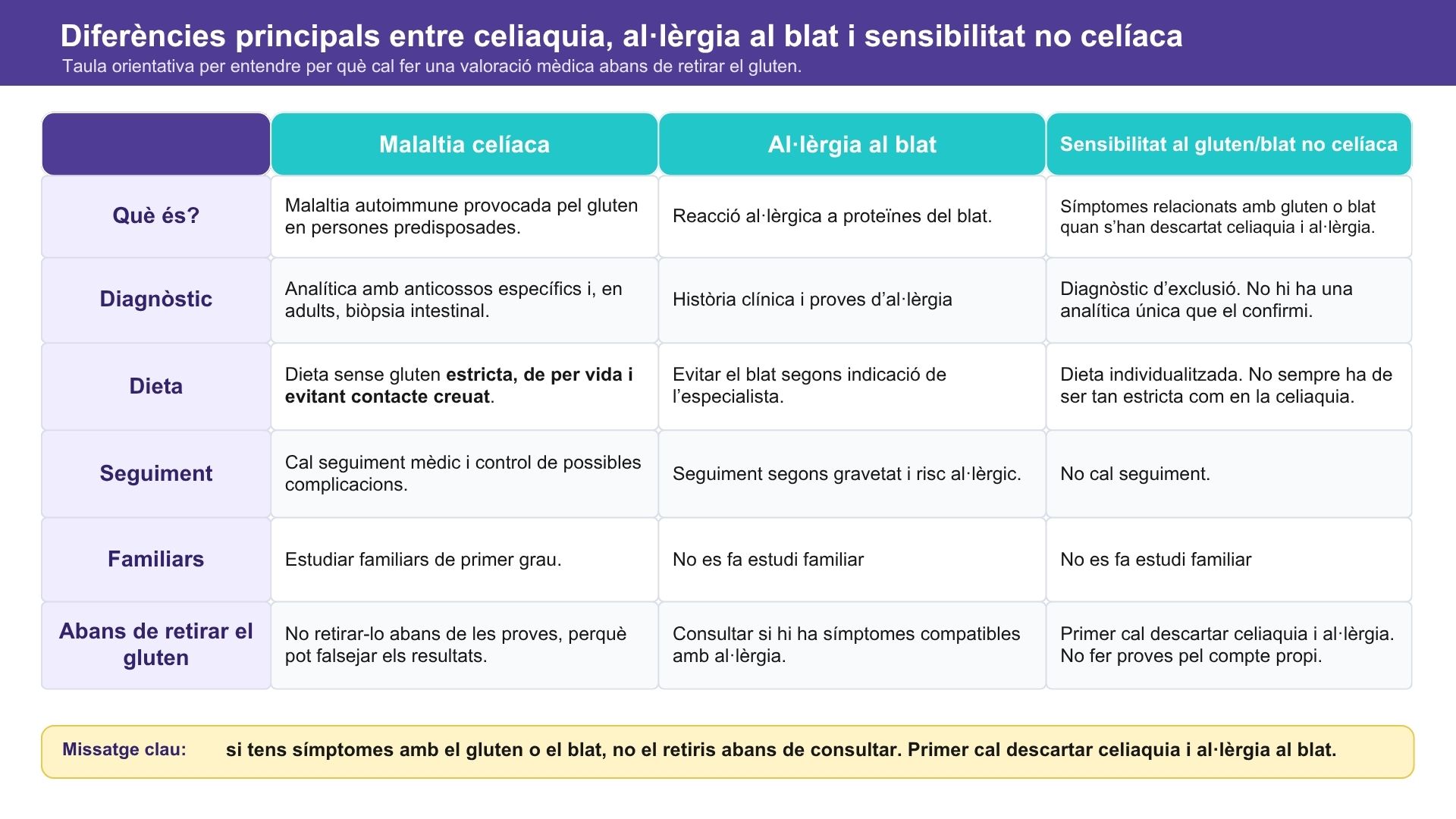
Non-celiac gluten/wheat sensitivity is a diagnosis of exclusion. This means that it can only be assessed when tests do not indicate celiac disease or wheat allergy, and when symptoms improve when gluten or wheat is removed and reappear when it is reintroduced in a controlled manner. There is currently no specific analysis that directly confirms this diagnosis, and research is still studying which component of wheat may cause symptoms in each patient: gluten, other wheat proteins, or fermentable carbohydrates.
Unlike celiac disease, when there is no diagnosis of celiac disease, the gluten-free diet does not have to be followed with the same degree of strictness, the same medical monitoring is not required and it is not advisable to carry out the family study for celiac disease. In these cases, the aim is to identify which foods trigger the symptoms and adapt the diet individually, avoiding unnecessary restrictions.
For this reason, it is not advisable to “play” with gluten, removing it and reintroducing it without guidance. Doing dietary tests on your own can lead to confusion, overly restrictive diets, nutritional deficiencies and delayed diagnosis of other diseases. The assessment should be done by a professional, who will decide what tests to do and how to guide the diet safely.
Key message: If you have symptoms with gluten or wheat, do not remove it before consulting. Celiac disease and wheat allergy must be ruled out first. Non-celiac gluten/wheat sensitivity is a diagnosis of exclusion.