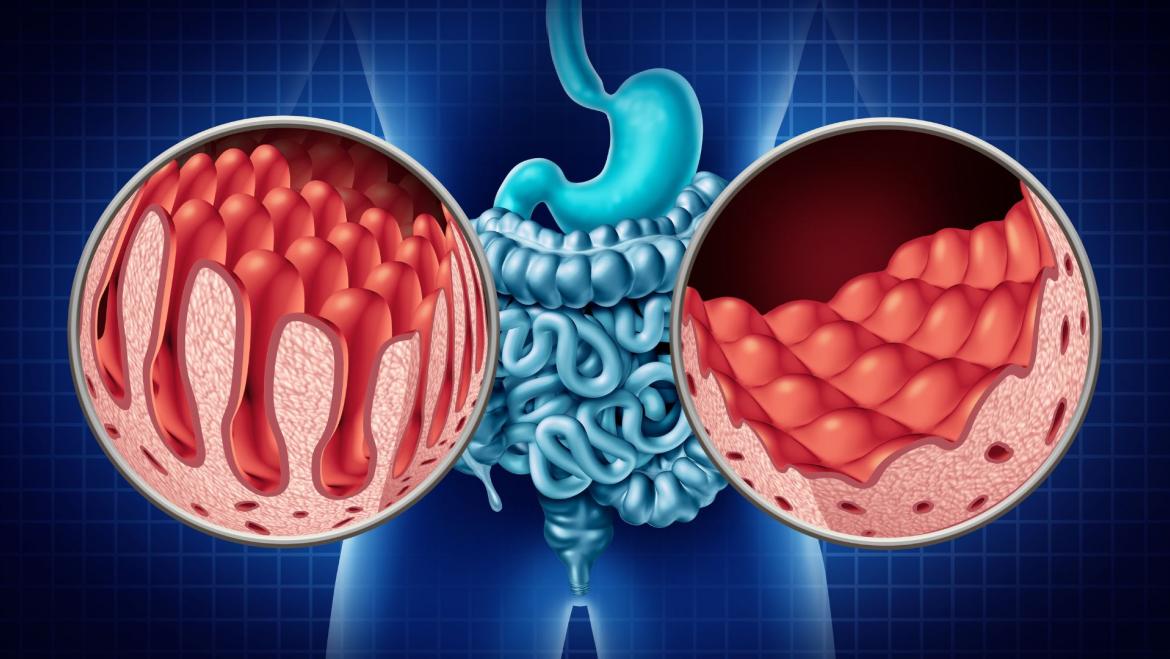

Celiac disease (CD) is a chronic, systemic autoimmune disorder triggered by gluten consumption in genetically predisposed individuals. Even small amounts of gluten ingested by people with celiac disease cause an immune response in the small intestine, leading to chronic inflammation and damage to the intestinal villi.

Healthy individuals have intestinal walls lined with villi and microvilli, which increase the surface area for nutrient absorption. In people with celiac disease, these villi disappear completely. This reduction in intestinal villi decreases or prevents the absorption of nutrients such as proteins, fats, carbohydrates, vitamins, and minerals, leading to nutritional imbalances and malnutrition. It can affect the entire small intestine: duodenum, jejunum, and ileum.
The prevalence of celiac disease worldwide is estimated at 1%. Specifically in Catalonia, it affects 1 in 204 people. Furthermore, it is three times more common in women than in men. It is important to remember that celiac disease is an autoimmune disease, not an allergy or an intolerance.
The disease is usually discovered between the fourth and sixth decades of life, with an average age of onset around 40-45 years. 25% of new celiac disease diagnoses are in people over 65 years of age.

Celiac disease is a condition in which the body reacts negatively to gluten, a protein found in wheat, barley, and rye. When someone with celiac disease eats gluten, their immune system (defense cells) is activated to fight it as if it were a virus or bacteria. This excessive inflammation damages the small intestine. This damage makes it difficult for the body to absorb important nutrients from food.
As a result, people with celiac disease may experience symptoms such as pain, bloating, diarrhea, and fatigue. Over time, if left untreated, it can cause more serious problems such as malnutrition and growth problems in children. The good news is that if you stop eating gluten, the inflammation doesn't occur, and therefore the disease goes dormant. But the moment you eat gluten again, since the immune cells are still compromised for life (chronic disease), they will react against the gluten again, causing damage with or without symptoms.
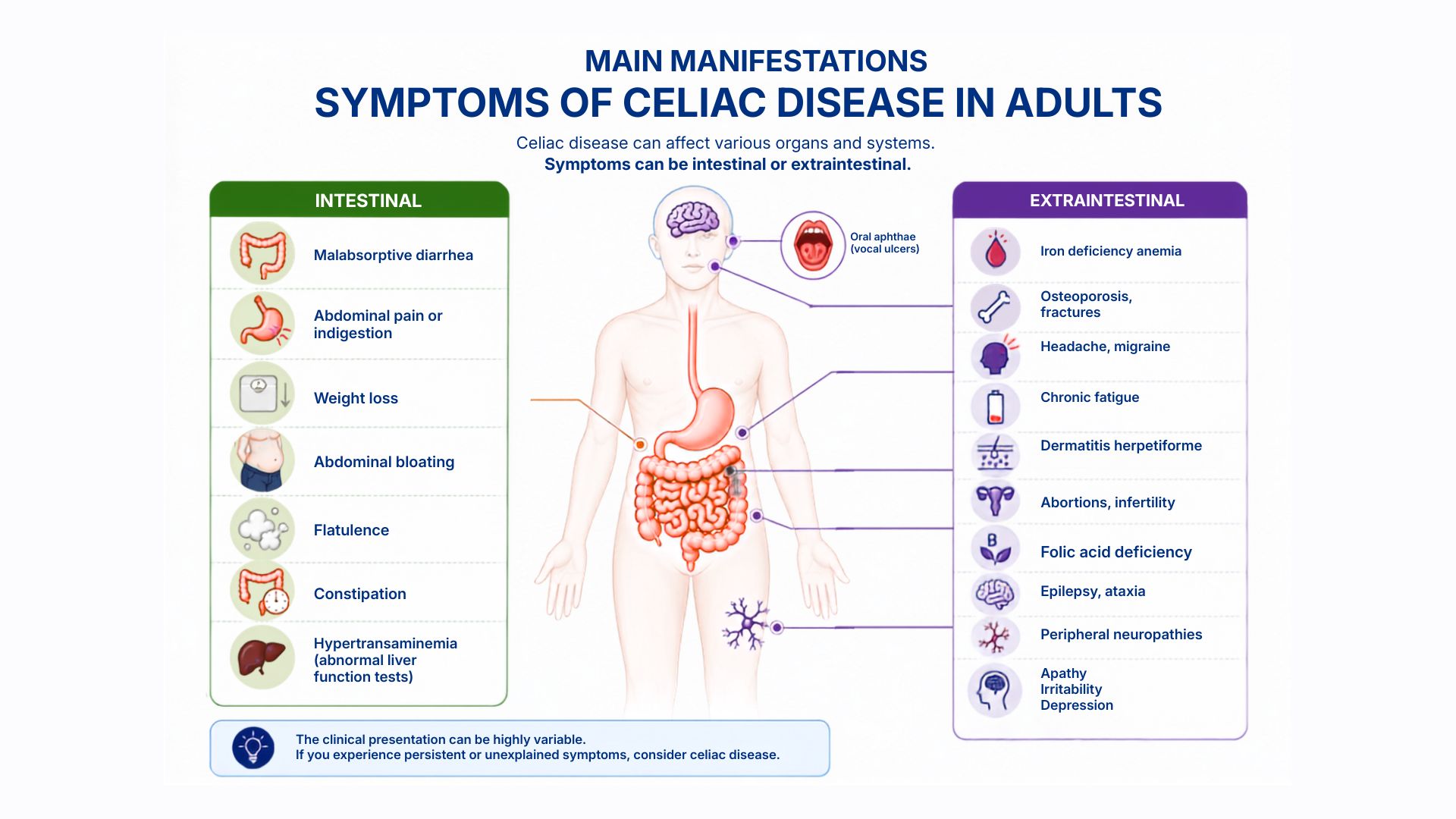
Clinical characteristics differ depending on the age of presentation.
In children, the so-called classic symptoms include diarrhea, steatorrhea, weight loss, iron deficiency anemia, and growth retardation.
In contrast, in adults, the classic presentation is uncommon (30%), and celiac disease is usually non-classic (50%) or subclinical/asymptomatic (20%). Non-classic symptoms are highly variable, ranging from bloating, abdominal pain, diarrhea, or constipation, to symptoms consistent with irritable bowel syndrome, and vomiting. Extraintestinal symptoms may also include fatigue, irritability, headache, foggy mind (difficulty concentrating after consuming gluten), iron deficiency anemia, early-onset osteoporosis, recurrent oral ulcers, abnormal liver function tests, recurrence, infertility, or dermatitis herpetiformis.

Dermatitis herpetiformis lesions. Font: HUB.
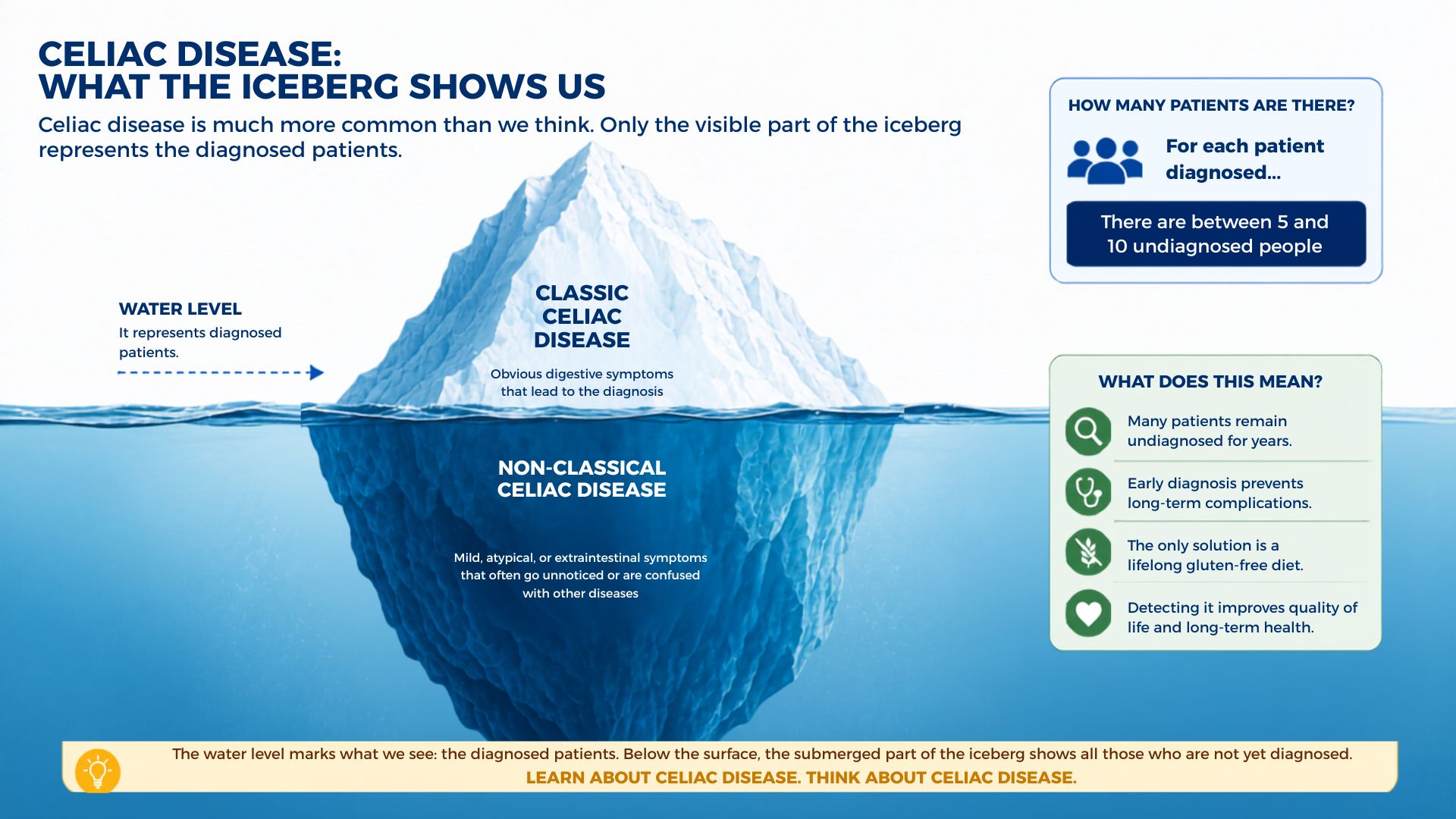
This variability in symptoms and their nonspecificity (these symptoms are common in people without celiac disease) makes diagnosis difficult. The fact that people with celiac disease can be asymptomatic further complicates the process of raising the suspicion necessary for diagnosis. Diagnosing celiac disease requires a high index of suspicion on the part of the clinician.

Symptoms or situations in which upper gastrointestinal endoscopy and duodenal biopsies should be offered even if MC serology is negative:
- Chronic non-bloody diarrhea
- Diarrhea with signs of malabsorption, especially if weight loss
- Iron deficiency anemia in the absence of other causes
- Childhood growth retardation
- Dermatitis herpetiformis demonstrated by biopsy
- Digestive symptoms with a family history of MC
- Digestive symptoms with a personal history of autoimmune disease or immunoglobulin deficiency
Second-degree relatives of people with any of the above symptoms also have a higher risk of MC and, therefore, their diagnostic study should be considered if they present symptoms, signs or abnormalities associated with MC.

Symptoms or situations in which serological testing should be offered as a screening method for celiac disease. A biopsy will be necessary if the serology is positive:
- Irritable bowel syndrome
- Recurrent colicky abdominal pain and/or distension
- Persistent and unexplained gastrointestinal symptoms including nausea or vomiting and dyspepsia
- Unexplained persistent elevation of transaminases
- Chronic digestive symptoms without a family history of MC or a personal history of autoimmune disease
- Microscopic colitis
- Autoimmune thyroid disease
- Osteopenia/osteoporosis (young adult/children)
- Unexplained ataxia or peripheral neuropathy
- Persistent oral ulcers or dental enamel defects
- Infertility, recurrent miscarriage, late menarche, early menopause
- Chronic fatigue syndrome
- Iron, vitamin B12 or folate deficiency not explained by another cause
- Down syndrome or Turner syndrome
A serological study is also recommended for first-degree relatives of a patient with celiac disease without digestive symptoms.
For those individuals in whom an investigation to rule out MC is to be initiated, it is necessary to advise that gluten should not be removed from the diet until the diagnosis has been confirmed by a specialist, even if the serology results have been positive.