
Complement this information with Celiac disease: complications if you eat gluten
The diagnosis of celiac disease doesn't end when the condition is confirmed. Celiac disease is a chronic condition, and while the only currently available treatment is a strict, healthy, and safe gluten-free diet, medical follow-up is crucial to ensure the condition is progressing well and to prevent potential long-term complications. A confirmed diagnosis is essential because it allows for the appropriate initiation of treatment and ensures that the necessary monitoring is known. Follow-up is important even if the individual feels well.
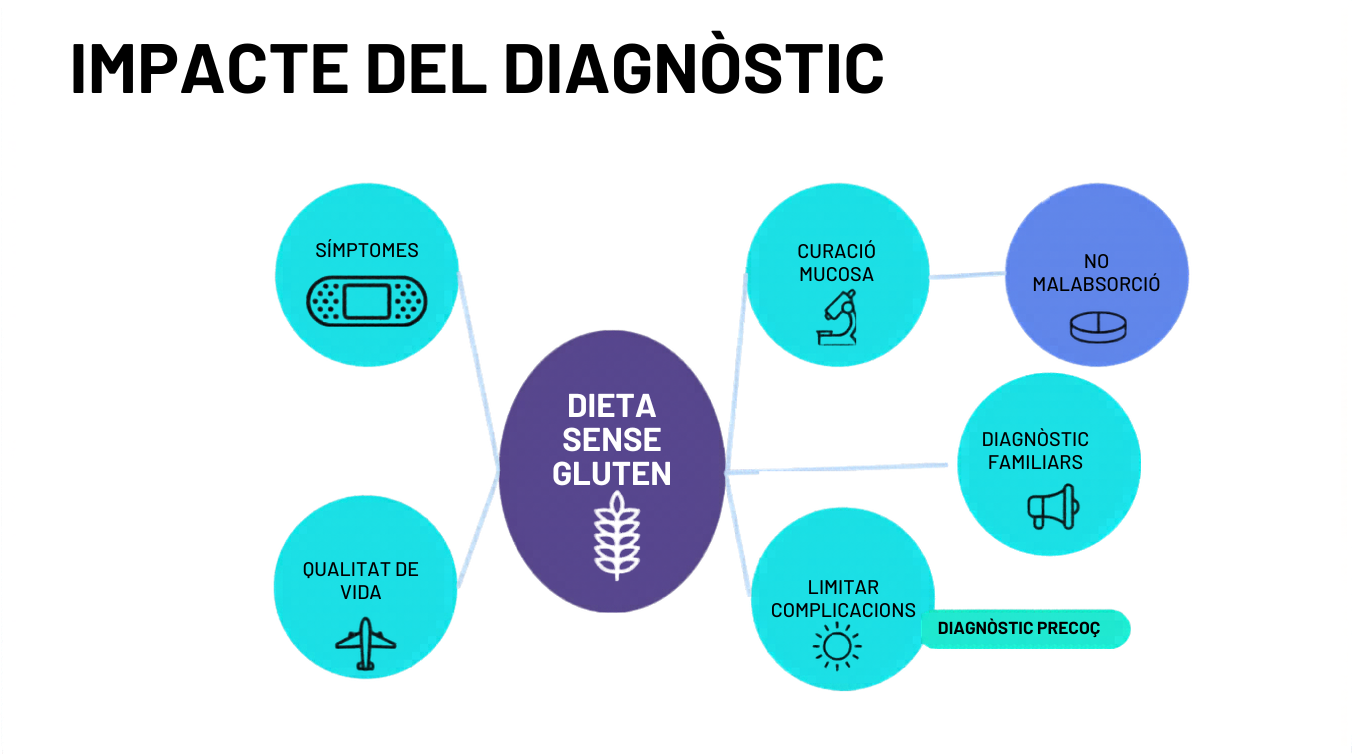
The aim of follow-up is to assess the response to the gluten-free diet and detect any associated problems. During check-ups, we review whether symptoms have improved, whether the gluten-free diet is being followed correctly, whether celiac disease antibodies are decreasing, whether nutritional deficiencies are being corrected, and whether any issues that may have been present at the time of diagnosis, such as anemia, iron deficiency, or other digestive problems, are improving.
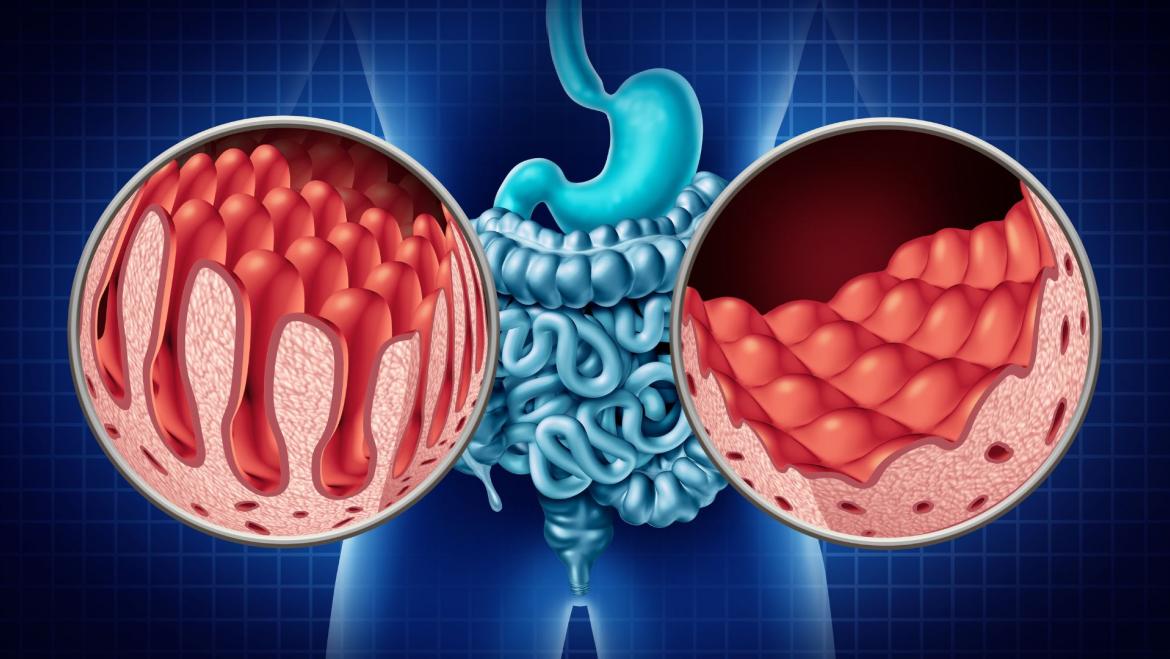
It is also important to assess bone health , especially in people diagnosed in adulthood. Untreated or poorly controlled celiac disease can contribute to decreased bone mass due to difficulty in properly absorbing certain nutrients such as calcium and vitamin D. For this reason, a bone density scan may be indicated in some patients.
Which follow-up is recommended?
In general, after diagnosis, the first blood test is recommended at 3–6 months. During the first year, checkups are usually more frequent, as this is the time to address any questions, reinforce the gluten-free diet, and ensure that the patient is progressing well. If the response is good, subsequent checkups can be spaced out, typically every 1–2 years.
Follow-up blood tests typically assess celiac disease antibodies, especially if they were elevated at the time of diagnosis. With a proper gluten-free diet, these antibodies should gradually decrease. Nutritional status and any abnormalities present at diagnosis are also reviewed, such as anemia, iron deficiency, vitamin deficiencies, or abnormal liver function tests.
It's important to know that negative antibodies don't always guarantee that the intestinal lining is fully recovered or that there haven't been any minor gluten exposures. For this reason, in some cases, a doctor may order the detection of immunogenic gluten peptides in urine or stool. This test can help detect recent gluten ingestion and can be useful when there are doubts about adherence to a gluten-free diet. However, immunogenic gluten peptides only indicate recent exposures. Therefore, a negative result doesn't rule out occasional transgressions outside the period detected by the test. Nor does it replace a medical, nutritional, and clinical evaluation of the patient.
The follow-up intestinal biopsy, starting two years after diagnosis, will be assessed on an individual basis.
Follow-up can be carried out from Primary Care, from Digestive or in a shared manner, provided that clinical recommendations are followed and the overall evolution of the patient is assessed.
In addition to medical follow-up, it is recommended to contact the Associació Celíacs de Catalunya (Catalan Celiac Association). Patient associations offer training, practical support, information on accredited products and establishments, and very useful resources for coping with daily life after diagnosis.

Once you have been diagnosed with celiac disease, these would be the first steps to follow:
- Prepare yourself mentally: The first thing to do is stay calm, because your life will change, but your symptoms will improve and you'll regain the energy you've been missing. You'll have limitations and at first it will be difficult to adapt; you'll make mistakes, but little by little you'll master the routines to avoid gluten. It's important to remember that initially many patients experience a shock phase that requires the help of psychologists.
- Associations: It's important to be well-informed and receive guidance. In this regard, we recommend joining the Celiac Association of Catalonia. They can provide you with the necessary tools to understand the disease, manage its progression, offer guidance, and help you learn how to follow a completely safe gluten-free diet. They will also explain what changes need to be made at home to avoid the risk of cross-contamination.
- Information: It is essential to understand celiac disease and the gluten-free diet. Information you may receive through social media or websites should be verified and accurate. For this reason, we have created this web content. We believe you will find all the necessary information here to learn more about your condition.
- Family and friends: It's important to inform your family and closest friends about your diagnosis. You'll need to explain what you can eat and how they should cook to ensure your food is gluten-free. Start with the family members who live with you. This leaflet summarizing the information for your family is very helpful.
- Check medications, toothpaste, and lipstick.
- When shopping for food and eating out, you need to consider different sizes . It's important to keep these tips in mind:
- Never handle a product with the same utensils (cutlery, toaster) that you have previously used to cook food containing gluten.
- Avoid using the same surface you have used for gluten-containing foods if it has not been properly cleaned (table, oven, pan).
- Do not buy bulk products or unlabeled artisanal products.
- If you eat out, make sure beforehand that the restaurant has gluten-free menus and ask the waiter if they cook avoiding cross-contact.
- If you have any doubts about whether a food may contain gluten or not, do not consume it.
- Plan your trip well in advance to ensure you can manage a strict gluten-free diet.
- Pack your “survival kit” in your backpack when you go on excursions or trips: fruit, nuts, gluten-free pasta and sliced bread, canned goods, legumes, oil, vinegar, salt, coffee, herbal teas, bags for the toaster or barbecue or oven, rubber spatula, freezer bags, labels.

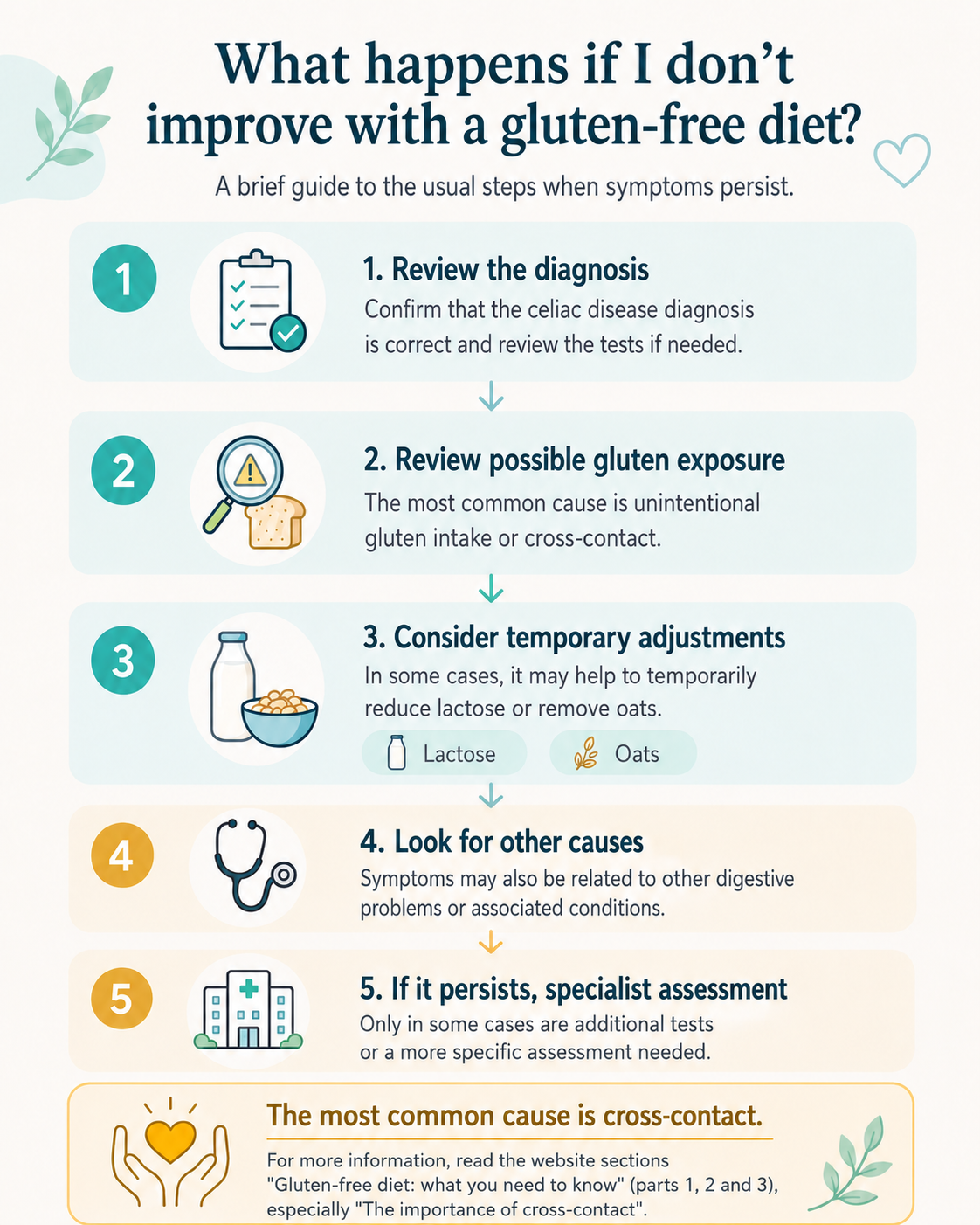
Most people with celiac disease gradually improve after starting a strict gluten-free diet. However, in some people, symptoms may persist or recur. In these cases, a thorough evaluation is necessary to identify the cause.
- Confirm that the diagnosis of celiac disease is correct. The healthcare professional will review how the diagnosis was reached and, if necessary, the tests performed.
- Review possible exposures to gluten. The most common cause of lack of response is the involuntary ingestion of gluten, often through cross-contact or through foods that may contain it without the patient identifying it. For this reason, it is especially useful to review the diet with a professional with experience in celiac disease, seek advice from the celiac association and learn everything about a strict gluten-free diet.
- Consider temporary dietary adjustments. In some cases, it may be worth considering temporarily reducing or removing lactose, especially if there is diarrhea, bloating, or gas, or temporarily removing oats, even if they are certified gluten-free, if it is suspected that they may be contributing to symptoms. These changes should be discussed with your healthcare professional and reevaluated later, and should not always be maintained indefinitely unless necessary.
- Assess other causes of symptoms. Having celiac disease does not prevent you from having other digestive problems or associated diseases. If symptoms persist, the healthcare professional will assess whether other causes need to be studied.
- Refractory celiac disease is very rare. Only in a small proportion of patients does intestinal damage persist despite a strict gluten-free diet and after other causes have been ruled out. In these cases, a specialized study is necessary.
If you have celiac disease and are not improving as you expected, do not make multiple dietary restrictions on your own. Consult with your healthcare team so they can assess the cause and indicate whether it is appropriate to make any temporary adjustments to your diet.
Font: Simón, E. Nutrients 2023, 15, 4013.
Refractory celiac disease is a severe and very rare form of the disease, affecting less than 1% of patients. It is defined by persistent or recurrent symptoms of malabsorption and villous atrophy despite a strict gluten-free diet for more than 12 months in the absence of other causes of non-response. The GIP test can be useful in distinguishing mucosal disease due to gluten ingestion from true refractory celiac disease. In some cases, immunosuppressive treatment such as cortisone should be considered.