
Gluten is a protein of plant origin present in some cereals and that celiacs, gluten-sensitive and allergic people must eliminate from our diets.
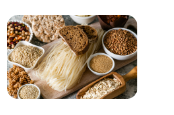
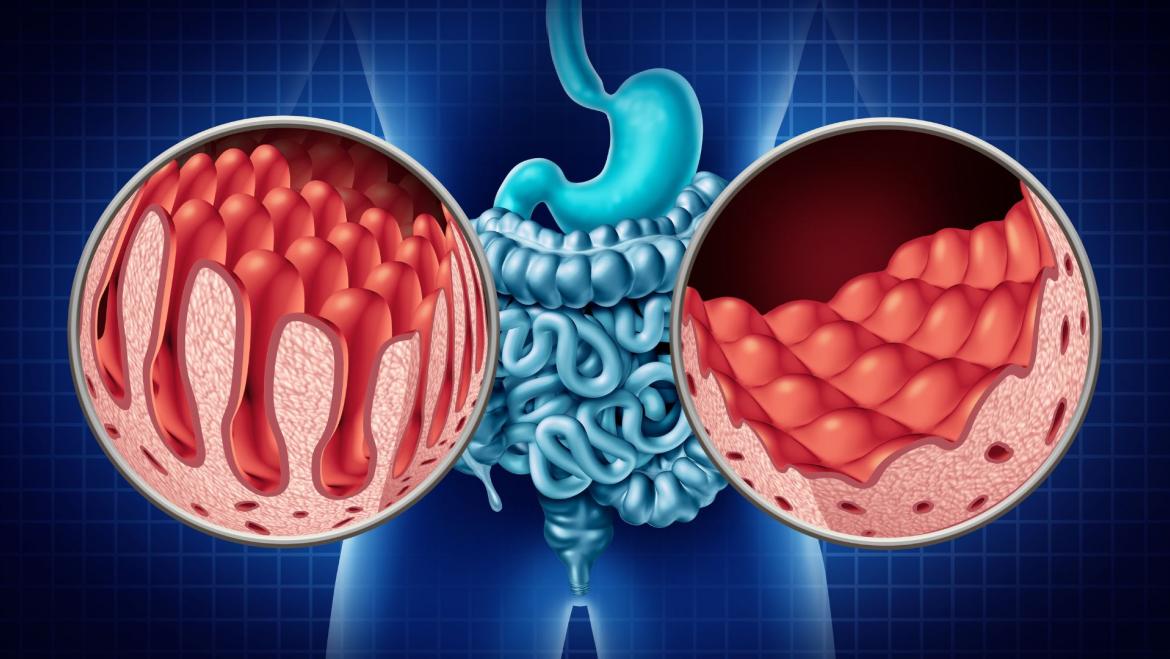
Gluten is not a harmful substance itself; it is the immune system of a celiac person that reacts incorrectly, confusing gluten with a harmful substance and triggering an inflammatory process in the intestine of the celiac person.
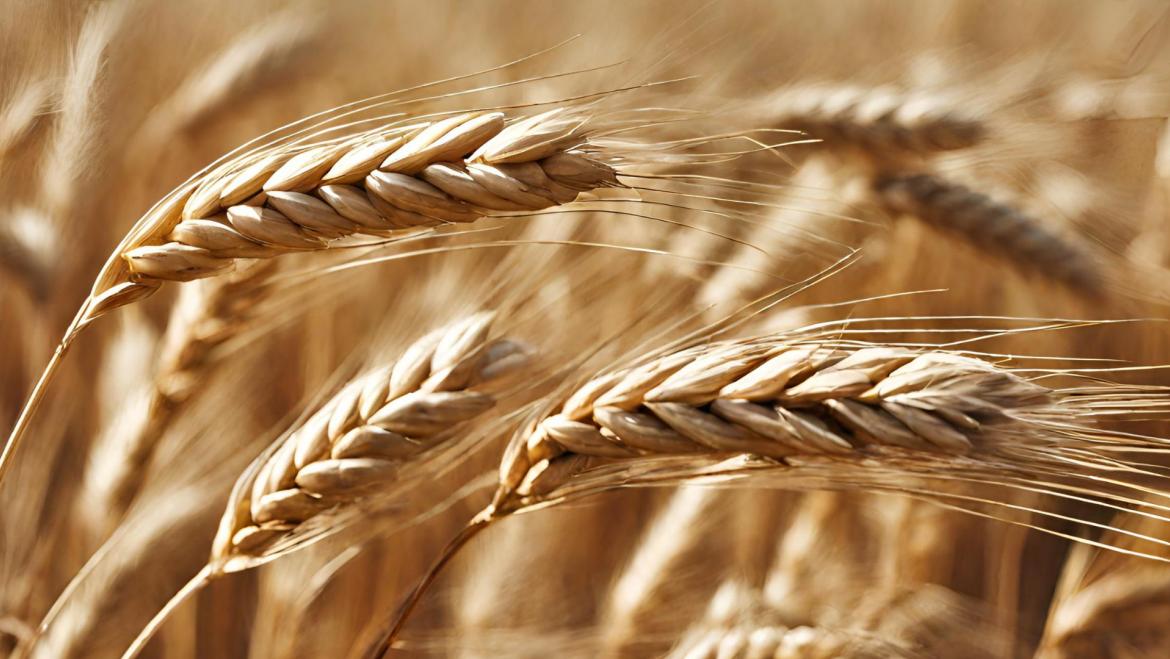
If we look at the wheat grain, which is the most commonly used for making flour, we see that it is basically composed of three parts:
- The bran, which surrounds the grain to protect it from the outside
- The germ, which is the reproductive part of the seed
- The endosperm, which represents approximately 83% of the total weight, contains reserve nutrients, specifically starch and proteins, including gluten. These are used during germination as a source of sugars and nitrogen, respectively.
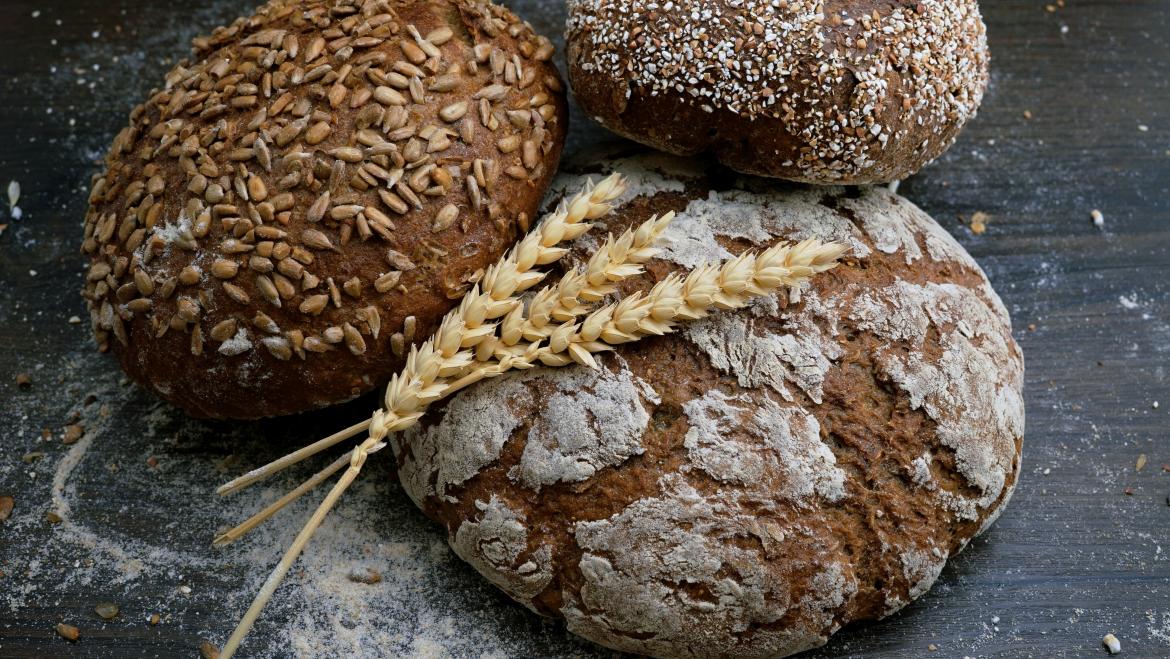
To obtain flour, we must grind the grain and then separate the bran and germ, leaving only the endosperm. In other words, flour is composed of the material contained in the endosperm: starch and proteins (gluten). Gluten is composed of gliadin and glutenin and acts as a binding, gelling, and emulsifying agent that binds water molecules. It is responsible for the elasticity of dough, which is why it is so important to the food industry. However, it should be noted that it does not provide any significant nutritional value and is not essential for our diet.
Glutenins are given different names depending on the cereal in question, for example:
- Glutenin, in wheat.
- Secalina, in rye.
- Hordein, in barley.
- Avenin, in oats*.
Gluten is found naturally in some grains and is also found in a large number of products, either as an ingredient or in trace amounts. The main grains containing gluten are wheat, rye, barley, spelt, triticale, farro, kamut, and einkorn. Gluten is also found in medications; therefore, it is always necessary to consult with a pharmacist and verify that the medication is gluten-free.
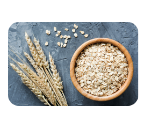
Oats are a naturally gluten-free cereal, but they are susceptible to cross-contamination and should be purchased only when labeled "gluten-free." Oat consumption is not discouraged because there is sufficient evidence that most celiac patients who consume them do not experience symptoms or intestinal problems. Furthermore, oat consumption can diversify and enrich the diet.
To introduce oats into a gluten-free diet, two factors must be considered: the absence of cross-contamination with gluten and individual tolerance. Contamination can easily occur in fields where other gluten-containing grains have been grown previously, during harvesting, milling, or packaging. Therefore, it is essential to check the packaging for the "gluten-free" label or mention. It is important to note that for oats to be suitable, they must be labeled "gluten-free." In some countries, oats are not introduced until the gluten-free diet is well established to detect any adverse symptoms. Therefore, it is important to follow the recommendations of a nutritionist, as introducing this grain may not be advisable for newly diagnosed patients.
| Català | Castellà | Anglès |
|
blat sègol ordi espelta kamut bulgur |
trigo centeno cebada espelta/escanda kamut bulgur |
wheat rye barley spelt kamut bulgur |
|
triticale (hybrid of wheat and rye) Trithordeum (hybrid of wheat and barley) |
||
| Català | Castellà | Anglès |
|
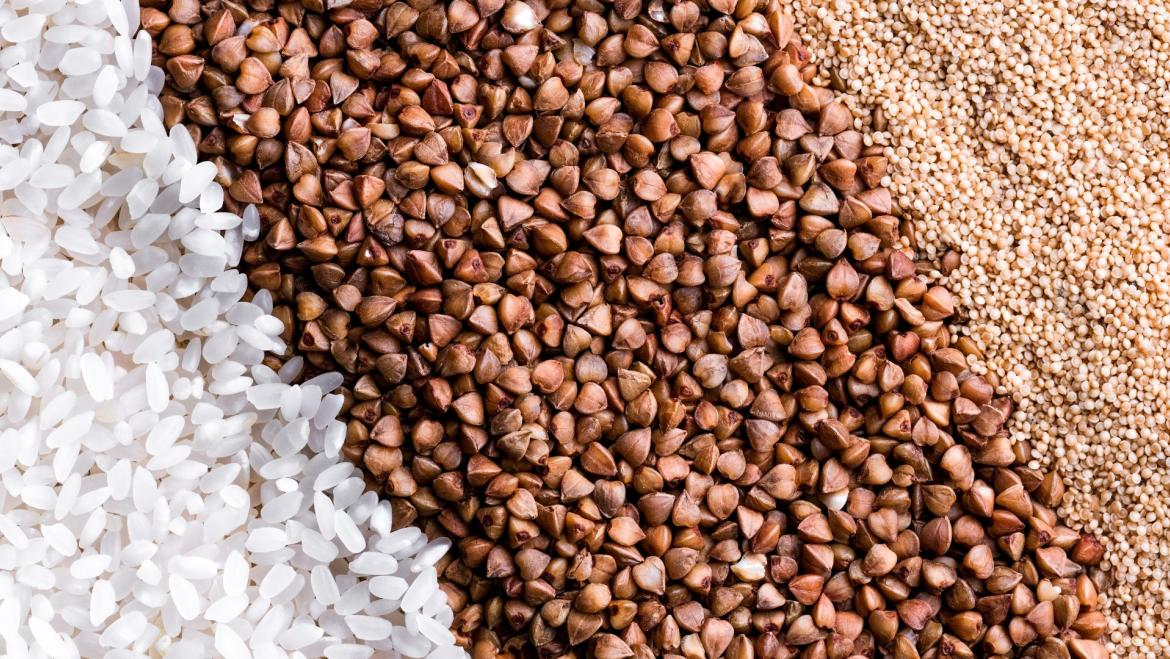
civada* arròs blat de moro quinoa mill amarant fajol melca teff |
avena* arroz maíz quinua mijo amaranto trigo sarraceno sorgo teff |
oat* rice corn quinoa millet amaranth buckwheat sorghum teff |
|
*These grains can be consumed as long as they have not been contaminated with gluten during the manufacturing process (they must be packaged and undisturbed). Those sold in bulk or milled may be contaminated. Milled grains can be consumed if they are packaged and certified gluten-free. |
||
*Oats in their pure state (not contaminated by wheat flour).
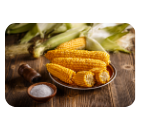
There are many gluten-free grains, pseudocereals, and seeds suitable for people with celiac disease, gluten sensitivity, or wheat allergy. These include corn, rice, buckwheat, millet, amaranth, and certified gluten-free pure oats. All of these are suitable options for safely making baked goods. Remember to always look for "gluten-free" certifications, even if you are eating grains that are naturally gluten-free, and avoid buying them in bulk to prevent cross-contamination. You will also find gluten-free flour mixes in supermarkets. These are all suitable options for safely making baked goods. Naturally unprocessed gluten-free grains and pseudocereals, such as rice, corn, quinoa, buckwheat, millet, sorghum, teff, and amaranth, do not need to be labeled "gluten-free." Flours, starches, and other products made from these grains must be properly labeled. Oats are only suitable when they have a fenced ear.
Furthermore, the following are gluten-free: fruits, vegetables, legumes, meat, fish, eggs, dairy products, water, nuts, and seeds in their natural, unprocessed forms. However, it's important to note that during handling, packaging, and distribution, these products may become contaminated with gluten and therefore unsuitable. Several considerations must be taken into account to ensure a successful gluten-free diet (see the food classification section).
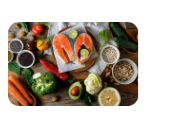
A healthy gluten-free diet should be varied, balanced, and based primarily on naturally gluten-free foods. This means that most meals should be prepared with vegetables, fruits, legumes, fish, eggs, nuts, seeds, extra virgin olive oil, and gluten-free starchy foods.
Although many of the foods mentioned in this section are naturally gluten-free, the recommendations in Part 3, "The Importance of Cross-Contact" should also be followed. Some foods can become contaminated during handling, packaging, preparation, or shared kitchen use.
Specific gluten-free foods, such as bread, pasta, cookies, breakfast cereals or pastries, can be part of the diet, but should not be the basis.
Gluten-free does not necessarily mean healthy.
Some specific gluten-free products are made primarily with starches or refined flours and may contain high amounts of salt, sugars, or fats.
Therefore, prioritize fresh and minimally processed foods that are naturally gluten-free, and reserve pastries, cookies, snacks, sugary cereals, and other ultra-processed gluten-free foods for occasional consumption.
A healthy gluten-free diet is not just about avoiding gluten: it is also necessary to ensure an adequate intake of fiber, protein, healthy fats, vitamins and minerals.
How to organize a main meal
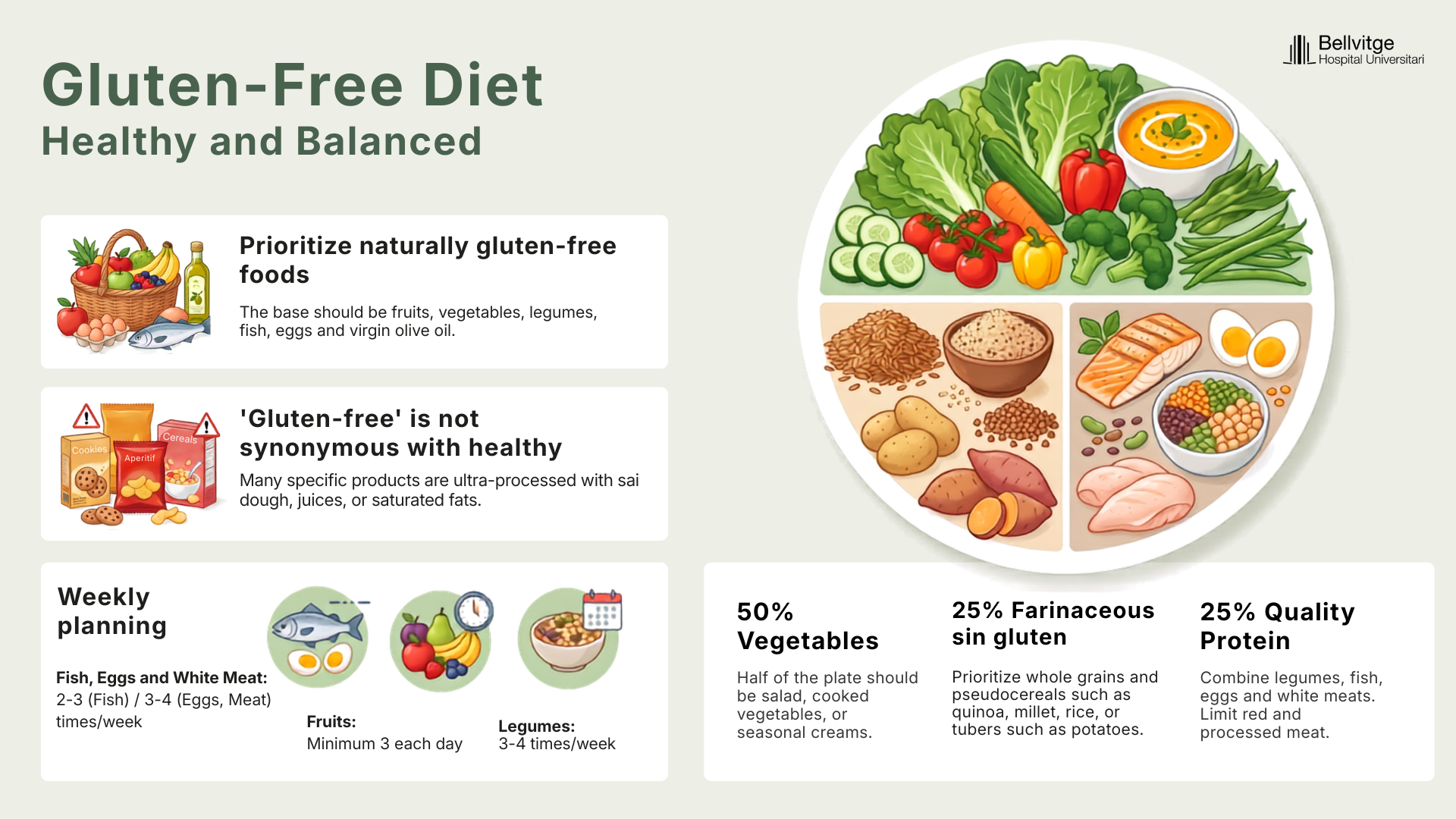
Use the healthy plate as a guide for preparing lunch and dinner.
- Half of the plate should be vegetables: salad, cream of vegetable soup, roasted vegetables, stir-fried vegetables, broccoli, green beans, spinach, zucchini, tomato, carrot, eggplant or other seasonal options.
- A quarter of the plate should consist of gluten-free starchy foods: potato, sweet potato, rice, corn, quinoa, buckwheat, millet, sorghum, teff or amaranth.
- The other quarter of the plate should be a source of protein: legumes, fish, eggs, white meat or, occasionally, red meat.
- Accompany the meal with water as your usual drink and use virgin olive oil for cooking and dressing.
It is not necessary for all meals to be exactly the same, but this structure can help to prepare more balanced and varied lunches and dinners.
Fruits and vegetables
Eat at least 3 pieces of fruit a day. You can have them for dessert, as a snack, for breakfast, or as a mid-morning or afternoon snack. Choose fresh fruit, whole or cut up, over juice.
Include vegetables at least twice a day, ideally at lunch and dinner. They can be raw, in a salad, or cooked by steaming, sautéing, baking, or in a creamed or puréed form.
Fruits and vegetables provide fiber, vitamins, and minerals. To encourage variety, combine different colors and types of vegetables throughout the week.
What are legumes and how can you include them in your diet?
Legumes are foods such as chickpeas, lentils, beans, broad beans, dried peas, and soybeans. They are a source of plant-based protein, fiber, and minerals, and can partially replace meat, fish, or eggs in some meals.
Eat legumes 3 to 4 times a week. You can prepare them in salads, stews, soups, homemade veggie burgers, hummus, or combined with vegetables and gluten-free grains.
In the case of lentils, refer to the specific instructions in Part 1, under the section “Exceptions to the classification of foods”: they must bear the mention “gluten-free” and, if they are dried, they must be visually inspected and washed before cooking.
Fish, eggs and meat
Alternate your protein sources throughout the week:
- Fish: 2 to 3 times per week.
- Eggs: 3 to 4 times per week.
- Meat: 3 to 4 times per week, prioritizing white meat, such as chicken, turkey or rabbit.
- Legumes: 3 to 4 times per week.
Limit red meat to a maximum of 1 or 2 times per week. Processed meats, such as cold cuts (excluding cheese), prepared hamburgers, sausages, or coated meat products, should be reserved for occasional treats.
In processed products, sausages or prepared meats, always check that they are suitable for celiacs.
Gluten-free starchy foods
Starchy foods provide energy and can be part of every main meal. In a gluten-free diet, you can choose potatoes, sweet potatoes, rice, corn, quinoa, buckwheat, millet, sorghum, teff, or amaranth.
Whenever possible, prioritize options like quinoa, buckwheat, teff, amaranth, and legumes. They provide more fiber and variety than basing meals primarily on products made with refined starches.
Bread, pasta, breakfast cereals, and other processed products should always be gluten-free. Choose options with simple ingredients and low levels of sugar, salt, and saturated fat.
Oats are only suitable when they bear the "gluten-free" label or the crossed grain symbol.
Nuts and seeds
Nuts include walnuts, almonds, hazelnuts, pistachios, cashews, and peanuts. It is best to eat them raw or roasted, without added salt or sugar.
A handful of nuts can be a good option for breakfast, a snack, or to complement salads, natural yogurts, vegetable creams, or legume dishes.
Examples of seeds include flax, corn, sesame, pumpkin, and sunflower. They can be added in small quantities to salads, yogurts, soups, breakfasts, or legume dishes.
Seeds help enrich meals because they provide fiber, healthy fats, and minerals.
Choose them natural, without added salt or sugar. Flax seeds can be consumed ground or crushed for easier absorption.
Dairy and plant-based alternatives
Milk, plain yogurt, kefir, and cheese can all be part of a healthy diet. Prioritize unsweetened plain yogurt and limit sugary dairy desserts.
Some people with celiac disease, especially at the time of diagnosis or if there is significant intestinal involvement, may experience lactose intolerance. In these cases, it may be necessary to temporarily choose lactose-free products , depending on individual tolerance and the healthcare professional's recommendation.
Lactose intolerance does not affect all people with celiac disease and can often improve as the gut recovers with a strict gluten-free diet.
In plant-based drinks, flavored yogurts, processed cheeses, or other manufactured products, always check the label to ensure they are suitable and do not contain excessive added sugars.
Olive oil, water, salt and sugar
Use extra virgin olive oil for cooking and dressing. It is preferable to the lower quality fats found in many ultra-processed products.
Water should be your main beverage, both with meals and between meals. Limit sugary drinks, sodas, energy drinks, and juices.
Reduce added salt and prioritize iodized salt. Suitable herbs and spices can help flavor dishes without adding much salt.
What can a healthy gluten-free breakfast look like?
A healthy breakfast can combine a gluten-free flour food, a source of protein or healthy fat, and a fruit.
Examples:
- Natural yogurt or kefir with fresh fruit, nuts or almonds and xia or flax seeds.
- Gluten-free bread with tomato, olive oil and egg, fresh cheese or hummus.
- Gluten-free rice, corn, buckwheat or buckwheat cakes with avocado, fresh cheese or tuna.
- Porridge made with certified gluten-free oats , fruits and nuts.
- French omelet with tomato, fruit and a slice of gluten-free toast .
Eviteu que l’esmorzar es basi habitualment en galetes, cereals ensucrats, brioixeria, batuts comercials o altres productes ultraprocessats sense gluten.
A healthy gluten-free diet is not just about removing gluten: it is necessary to prioritize fresh, varied foods that are naturally gluten-free, and to limit ultra-processed foods even if they are labeled as "gluten-free".
Per facilitar la dieta sense gluten estricta i poder fer el tractament de la malaltia celíaca, des de la Federació d’Associacions de Celíacs d’Espanya (FACE), s’ha elaborat una classificació dels aliments sense gluten molt útil. Cal remarcar que el gluten és obligatori indicar-lo en l’etiqueta d’un producte si és utilitzat com un ingredient. En canvi, les traces només són obligatòries indicar-les en els aliments genèrics. Per tant, si un aliment és convencional i no ve la menció <<sense gluten>> no podeu consumir-lo. Busqueu el “logo de l’espiga”, que indica els productes i aliments lliures de gluten.
To facilitate a strict gluten-free diet and the treatment of celiac disease, the Federation of Celiac Associations of Spain (FACE) has developed a very useful classification of gluten-free foods. It is important to note that gluten must be declared on a product label if it is used as an ingredient. However, traces of gluten are only required to be declared on generic foods. Therefore, if a food is conventional and does not include the label "gluten-free", it cannot be consumed. Look for the “spike logo”, which indicates gluten-free products and foods.
Dividim els aliments en:
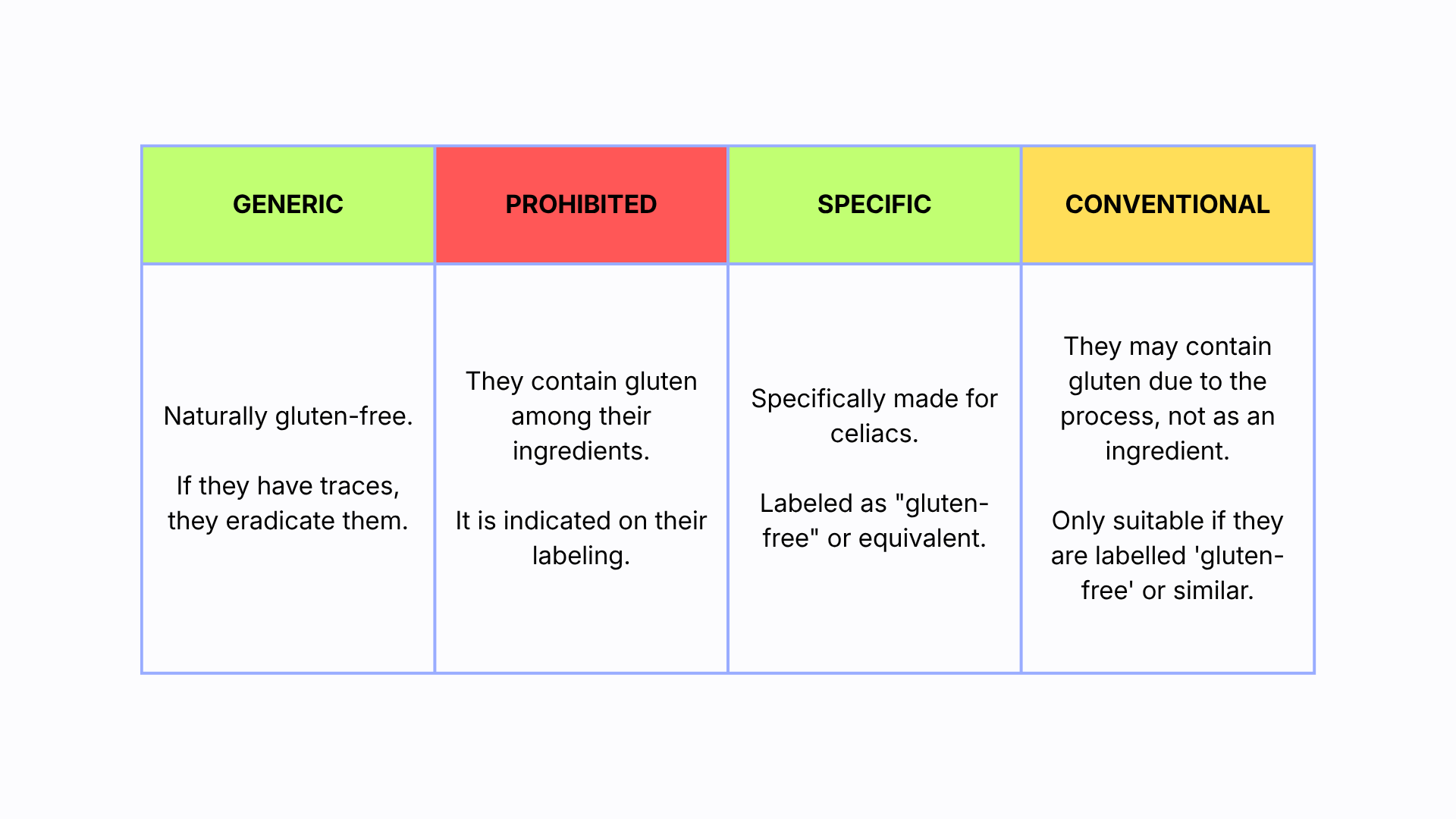
- Generic: naturally gluten-free. They don't need to be labeled "gluten-free." Examples include milk, eggs, fruit, fish, meat, vegetables, shellfish, and jam. They will only be labeled if they contain traces of gluten, and in that case, they should not be consumed.
- Non-generic. These are divided into:
- Conventional: These are products that, due to their manufacturing or formulation process, may come into contact with gluten. While the ingredients label may not list gluten-containing grains as an ingredient, they may contain gluten as an additive (to give the food consistency) or because cross-contamination occurred during manufacturing, resulting in gluten levels greater than 20 ppm. If the product is not labeled "gluten-free," it should not be consumed. Examples include sausages, sauces, cooked legumes, and plant-based beverages.
- Specific products: These are products specifically formulated for people with celiac disease. They are labeled "gluten-free". These are specially designed products in which gluten-containing grains have been replaced with gluten-free alternatives. For example, gluten-free bread, pizza dough, and cookies.
- Not suitable/prohibited: Those that contain cereals with gluten or derivatives as an ingredient. You will need to check the label to see if it contains cereals with gluten. For example, on some non-specific cookies, the label will list "wheat" in bold within the ingredients list.
List with the classification of foods for patients with celiac disease
You must check the labeling of all products you will eat. If you have any doubts about whether it is safe, do not consume it.
Spices
Spices and natural herbs in branch, strand or grain form, in their natural state, dried or dehydrated, are suitable as long as they do not indicate possible traces of gluten.
Processed, ground, powdered, freeze-dried or mixed spices must bear the "gluten-free" label.
Cumin is the exception: even when it is presented in seed form, it must carry the "gluten-free" label.
Legumes
Legumes are a generic product, meaning they are naturally gluten-free. They can be consumed from any brand unless the label indicates otherwise. This includes dried legumes and pulses, as well as cooked or precooked legumes, both plain and frozen. Cooked lentils are not considered generic, nor are packaged cooked legumes, such as those sold in bean stews.
Dried legumes such as lentils, chickpeas or white beans are not considered suitable if they are in bulk (without packaging) as cross-contamination can occur during transport or storage.
Fresh legumes, with or without shells, such as green beans, peas, or broad beans, can be consumed in bulk like any other fruit or vegetable.
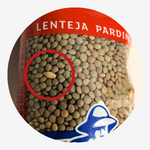
Raw lentils and plain cooked lentils must be labeled "gluten-free". In the case of raw lentils, visually inspect them, remove any wheat grains, rinse them thoroughly with water, and cook them.
Note the white grain on the left of the bag, as this is a grain of wheat that should not be ingested.
Loose legumes are not considered suitable. It is preferable to buy them packaged.
Legume flours must be labelled “gluten-free”.
Beers

s this beverage is made with a cereal containing gluten, it is essential to ensure its complete absence (all batches are tested). Only those products certified by the Crossed Grain symbol may be consumed. For more information, please visit: https://www.celiacscatalunya.org/ca/marca_espiga_barrada
Gluten-free wheat starch

It is currently possible to make gluten-free products with wheat starch thanks to technological processes, but they can only be consumed if the final product is certified gluten-free.
Gluten is not absorbed through the skin, so there is no risk to people with celiac disease. Symptoms only appear in celiac patients after ingesting gluten. There is no scientific evidence that cosmetics containing gluten, even if not ingested, can be harmful to celiac patients or those with dermatitis herpetiformis (a type of dermatitis that develops in celiac patients when they consume gluten). It is only the ingestion of gluten that triggers the immune response leading to the autoimmune process typical of celiac disease. Therefore, topical products (body lotions, sunscreen, deodorant, makeup, and perfume) can be used safely, provided they are not accidentally ingested.
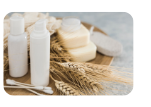
Just be aware of lipsticks, toothpaste, and mouthwash, among other products, as they could be ingested. However, even in the case of accidental ingestion, we are talking about minimal amounts that would rarely cause a problem. In these cases, the products must be labeled "gluten-free."