
Comprehensive Cancer Centre
The Bellvitge Health Campus offers two million people access to the cancer care model that Europe aims to implement by 2030
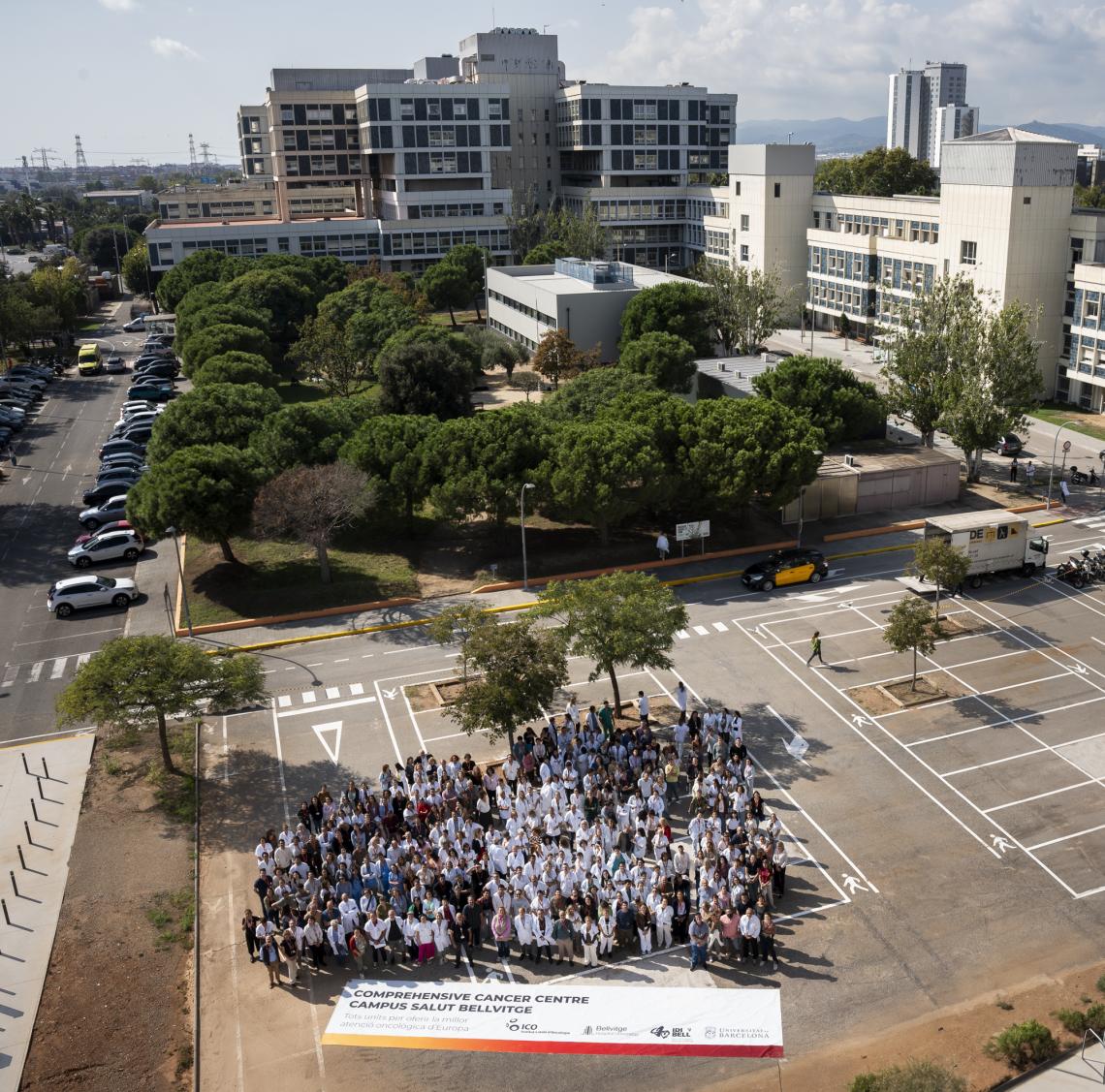
Recognition of the Bellvitge Health Campus, which brings together the Bellvitge University Hospital, the Catalan Institute of Oncology, the Bellvitge Biomedical Research Institute, and the University of Barcelona, as a Comprehensive Cancer Centre granted by the OECI (Organisation of European Cancer Institutes).
This organisation promotes excellence in cancer care, research, and education, and harmonizes and establishes quality standards for cancer treatment and research across Europe.
A Comprehensive Cancer Centre is an institution that integrates clinical care, research, education, and prevention, offering multidisciplinary and evidence-based attention. It is not just a hospital, but a specialized structure that provides patients with advanced and personalized clinical treatment, opportunities to participate in clinical trials, as well as psychosocial support and rehabilitation services.
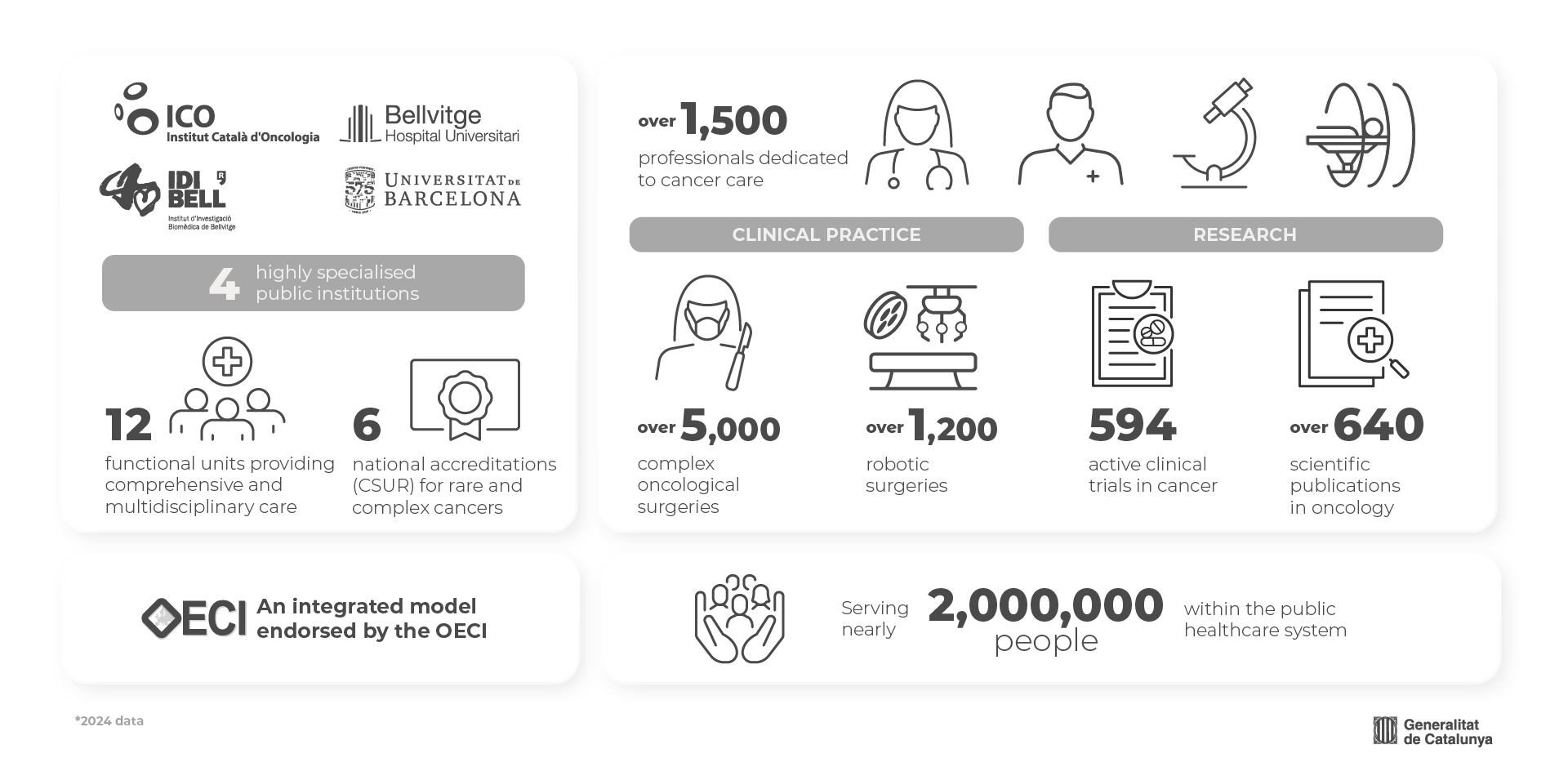
What does this mean for citizens?
- Rapid and personalised diagnosis, thanks to precision medicine and the integration of advanced technologies such as the clinical PET/MR, the only one of its kind in Spain.
- Preferential access to clinical trials, allowing patients to receive innovative drugs and therapies before they become commercially available.
- More complex yet less invasive treatments, resulting from the combination of advanced surgical technology, state-of-the-art radiotherapy, a brachytherapy unit that serves as a reference for the whole of Catalonia, and translational research
A campus committed to Europe
This accreditation is part of the Europe’s Beating Cancer Plan, which aims for 90% of European citizens with cancer to have access to a Comprehensive Cancer Centre by 2030.
With this recognition, the Bellvitge Health Campus stands alongside leading European oncology institutions such as Gustave Roussy (France), the Karolinska Institute (Sweden) and the Charité Comprehensive Cancer Centre (Germany), reinforcing the position of Catalonia and Spain as European leaders in oncology.